
Data mapping services
Our data mapping services link data items from your systems and databases to their location or entity on the floor plans, enabling reliable reporting, integrations, and interaction across Smplrspace and connected systems.

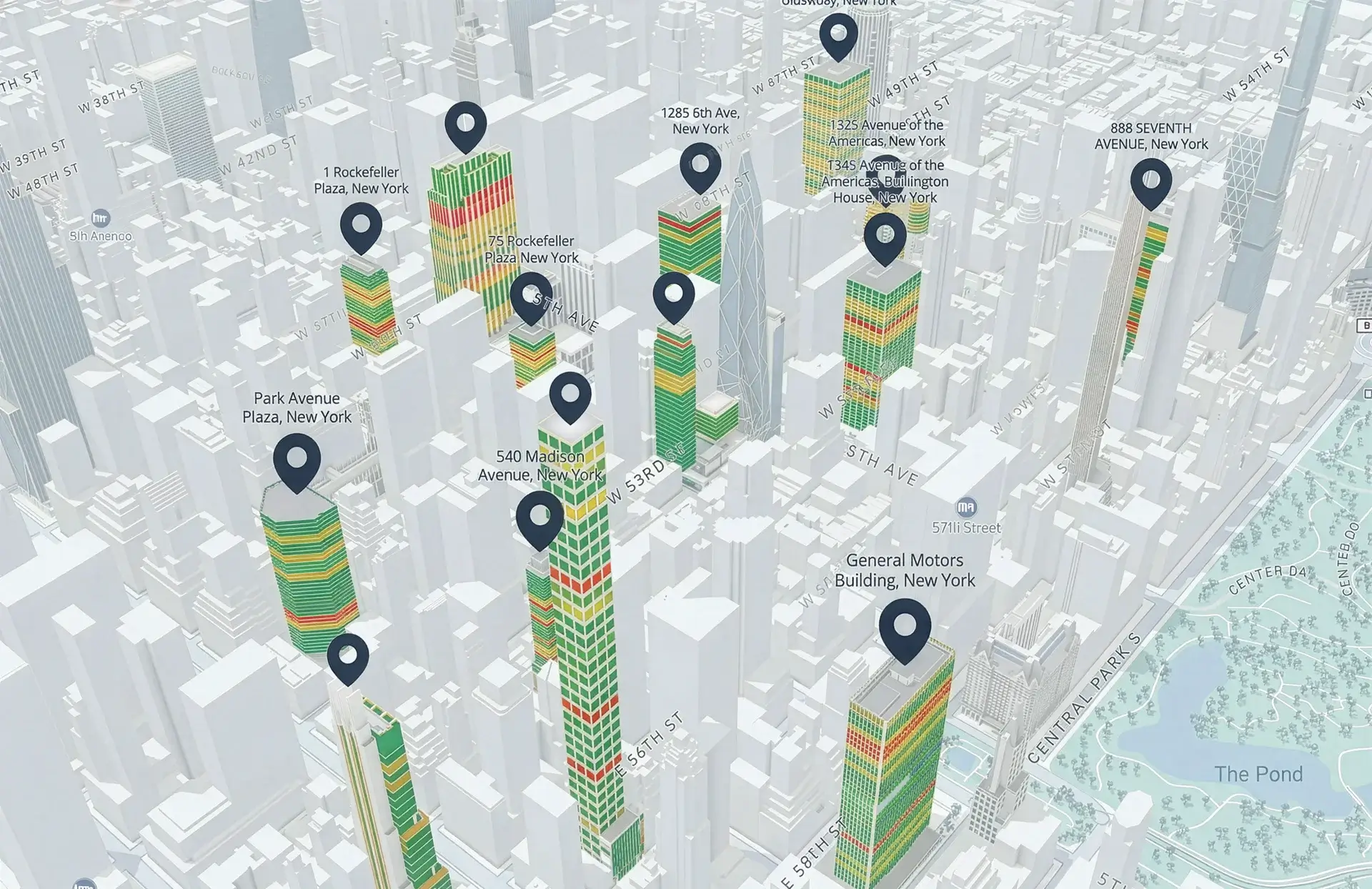

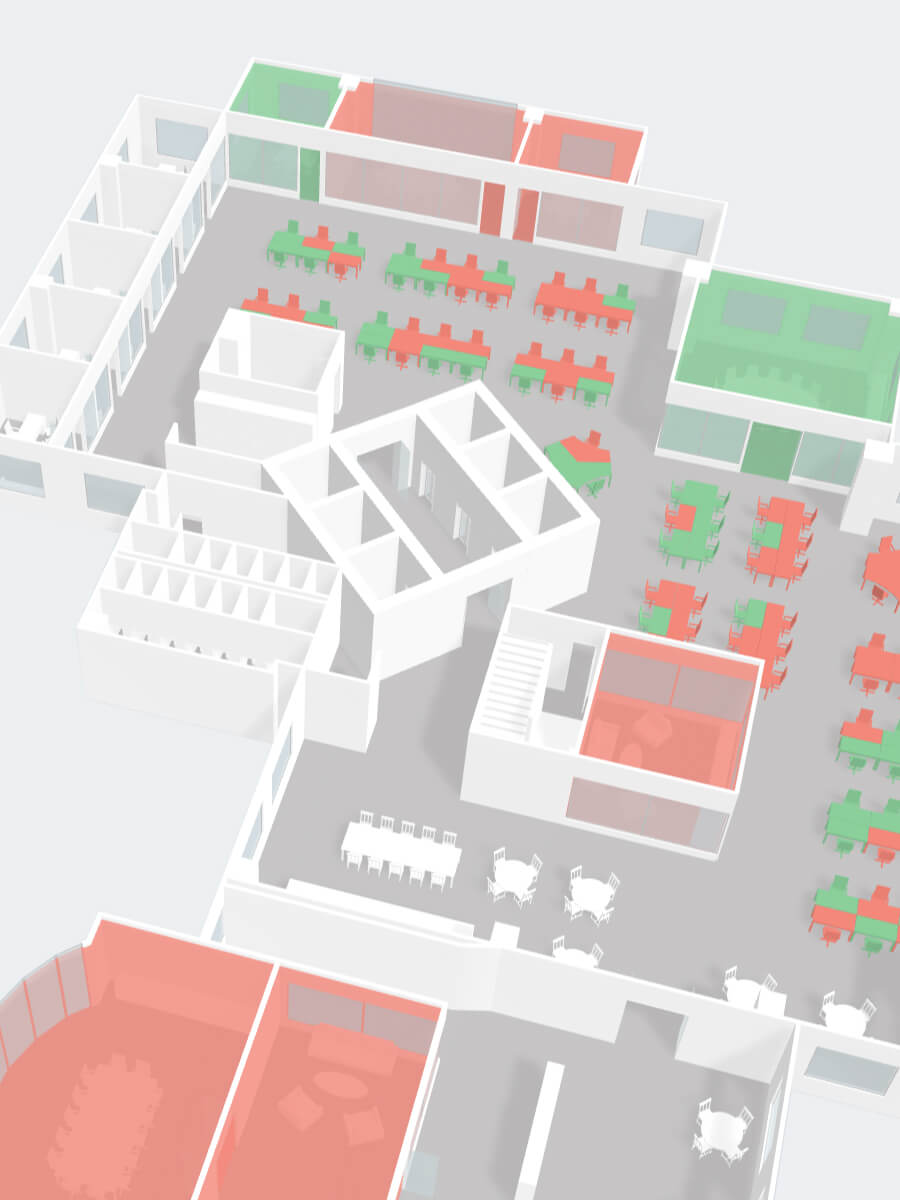
What this service delivers
Data mapping ensures that rooms, furniture, equipment, sensors, and other spatial entities are consistently identifiable and reliably linked to your data and the space they belong to.
The service removes manual effort and ambiguity, so spatial data works as expected across reports, products, and systems.
Save time by outsourcing precise entity mapping to specialists
Ensure consistent, stable IDs across spaces and portfolios
Reduce errors in reporting and integrations
Prepare spatial entities for reuse across systems and workflows
How it works
Data mapping follows a structured process designed to ensure accuracy, consistency, and predictability.
Define entities and identifiers
You share your list of entities to be mapped, such as rooms, zones, desks, equipment, sensors, or other assets, along with their identifiers, typically via CSV, Excel file or Google Sheets.
Map entities to space
We link each entity to its exact spatial location on the digitized floor plans, assigning unique IDs and coordinates.
Validate and deliver
Mapped entities are reviewed for accuracy and delivered directly into your Smplrspace organization account, ready for reporting, APIs, and integrations.
Flexible mapping for real-world assets and systems
Data mapping adapts to the type of entities you track, the systems you connect, and at the scale you operate and need.. Mapping can start small and expand as integration and reporting needs grow.
Entity types
Map rooms, desks, sensors, furniture, equipment, and other spatial entities that need to be tracked, referenced, or visualized.
Identifier strategy
Smplrspace assigns unique IDs to spatial entities so they can be reliably linked to data across reports, APIs, and external systems.
Scale and coverage
Apply mapping at any level, from individual floors to entire buildings, portfolios, or multi-site environments.
Prepared for reporting and integrations
Mapped entities are structured to work consistently with spatial reporting and downstream integrations without rework.
FAQs
Questions come up when exploring a new platform. Here are answers to the most common ones. Contact us if you need more detail or want to discuss your setup,.
Yes. Teams can map entities themselves programmatically or via our Entity manager. This service is designed for teams that want speed, accuracy, and consistency without manual effort and the busywork.
Rooms, desks, sensors, furniture, equipment, and any object or concept that has a spatial location or boundary.
Data mapping is required whenever reports, APIs, or external systems need to reference specific spatial entities reliably.
Yes. Mappings can be extended or updated as spaces, assets, or data change.
Pricing is based on data volume and mapping complexity. A clear quote is provided before work begins.
Mapped entities are delivered directly into your Smplrspace organization account, ready for use in integrations.
Yes. If adjustments are needed, they can be reviewed and handled as part of the delivery process.
Request data mapping services
Share your entity list or get in touch to discuss scope, identifiers, or timelines.
Our team will help you define the right approach and provide a clear quote before work begins.
Pricing is based on entities count footage and service complexity
Quotes are provided before any work starts
Mapped space are delivered directly into your Smplrspace organization
Floor plan digitization services
Our digitization service produces lightweight, clutter-free digital spaces that are easy to navigate, reuse, and scale.
Integrate & embed Smplrspace
Smplrspace integrates quickly into existing products and systems, amplifying instead of replacing current processes and workflows.